/
ABOUT NEW LANTERN
Radiologists lose 44% of their day to software. We built the system that gives it back.
Dhanoa D, Dhesi T, Burton KR, Nicolaou S, Liang T. The Evolving Role of the Radiologist: The Vancouver Workload Utilization Evaluation Study. Journal of the American College of Radiology (JACR). 2013;10(10):764-769. doi: 10.1016/j.jacr.2013.04.001
/
OUR STORY
What we kept hearing.
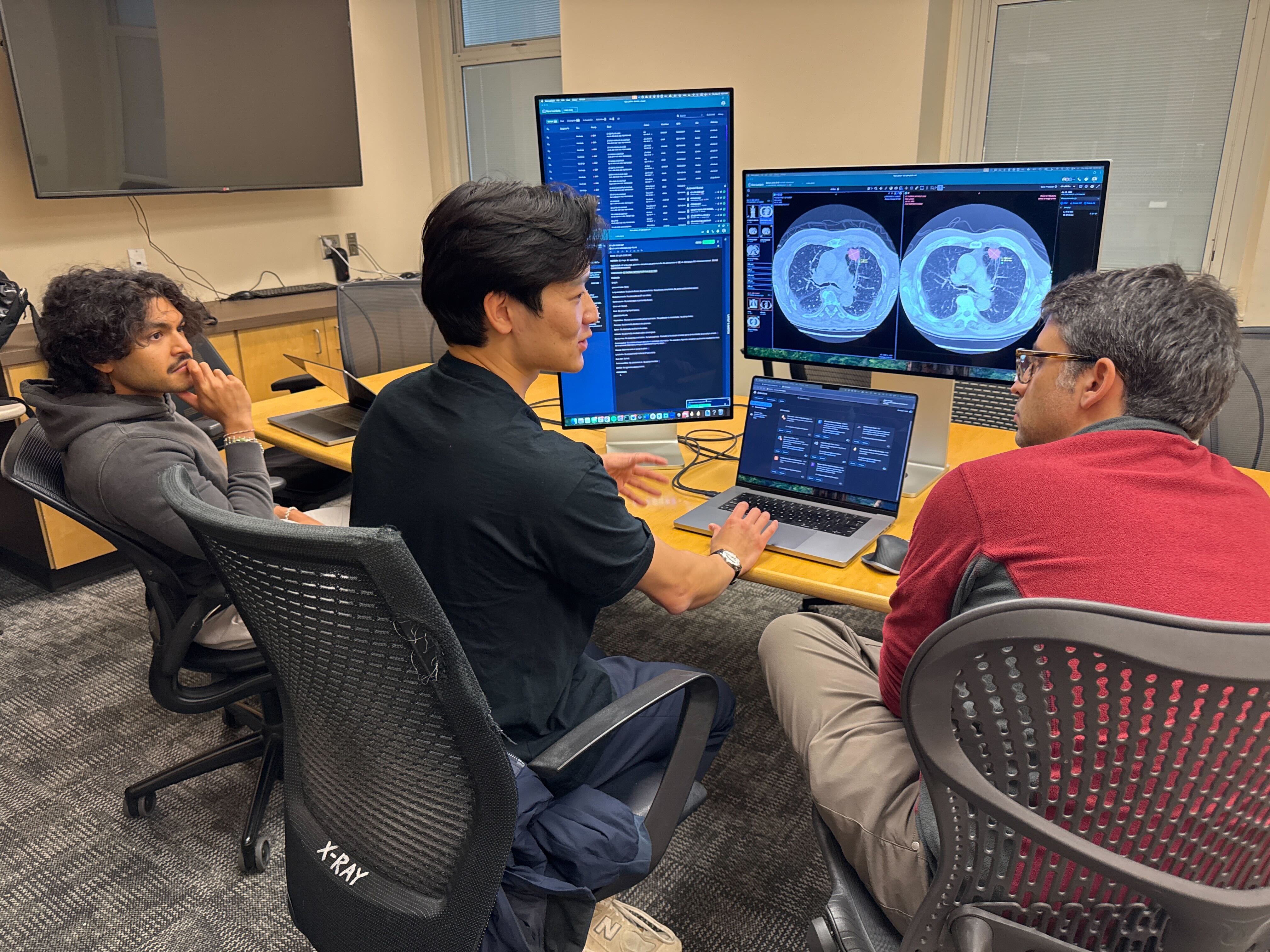
Radiology software wasn’t designed around the radiologist. It was designed around the data. The result is a workday built on separate logins, separate interfaces, and constant context-switching between systems that were never meant to talk to each other.
The work that suffers is the work that matters: reading studies, making diagnoses, signing reports. Research puts the non-interpretive burden at 44% of a radiologist’s day. That number didn’t surprise anyone on our team. We’d already seen it firsthand.
Every conversation started the same way. Open the worklist, switch to the viewer, jump to the reporting tool, manually pull priors, copy findings into the EHR. One hundred times a day. “I didn’t train for twelve years to manage software.” We heard it enough times that we stopped treating it as a complaint and started treating it as a design brief.
/
OUR TEAM
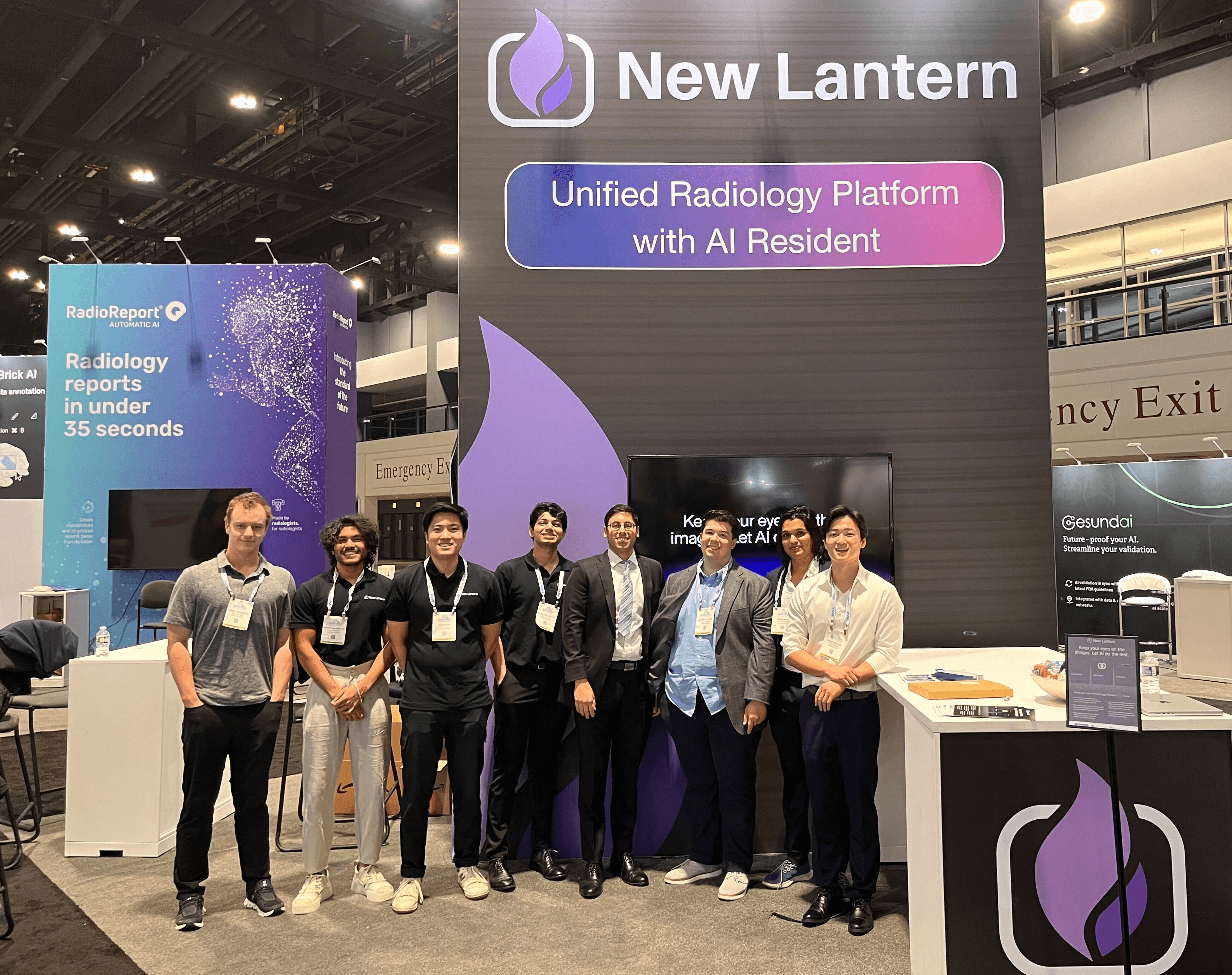
Built for the world's best radiologists. By Silicon Valley's best engineers.
Our engineers have built infrastructure at the scale of millions of requests per second at companies you already rely on. Sub-second image loading isn't a marketing claim. It's a baseline engineering expectation.
Our radiologists have each read tens of thousands of studies. They can tell you exactly which workflows break down and where the time goes. That clinical depth is why New Lantern feels like it was designed by someone who has actually worked a shift, not someone who read a requirements doc.
Our AI researchers built Curie to learn how each radiologist reports: which qualifiers they prefer, which findings they consistently flag, and where. It gets better the more you use it, because it pays attention to how you actually work.
/
OUR INVESTORS






Radiology software should make you faster, more accurate, and free to focus on what you trained for.
When the worklist surfaces the right case, images load before you finish pulling your chair in, and Curie has already drafted the report in your style. The software stops being something you manage and becomes something that works for you. That’s what we build. Every day.


