Product Enhancements
New Lantern Releases State-of-the-art Radiology Speech Model
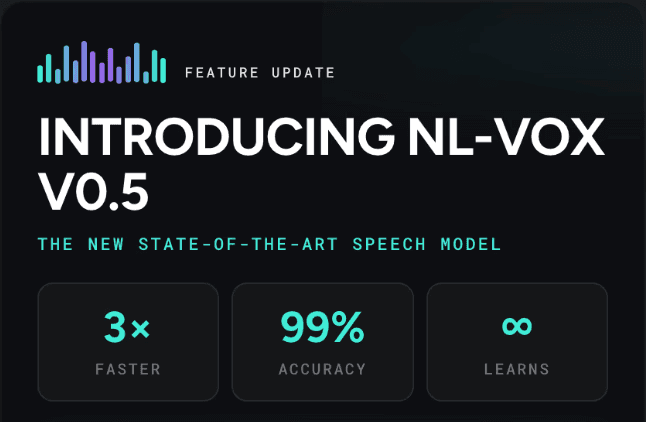
New Lantern's speech model is purpose-built for radiology dictation, handling medical terms, laterality, and dates that general speech engines get wrong.
/
AUTHOR

Alex Haimson
Why Radiology Needs Its Own Speech Model
Radiology dictation is structurally different from the kind of speech that general models are optimized for. Reports are dictated in short, fragmented bursts rather than flowing conversation. They're dense with measurements, anatomical terms, and classification systems (TI-RADS, BI-RADS, LI-RADS, Fleischner) that don't appear in typical training data. And they're full of dates, which even the best general-purpose models handle poorly.
The result is that radiologists spend real time every day cleaning up after their speech engine. It's not a catastrophic failure. It's a constant low-grade tax on attention and speed. As one diagnostician put it: morale sapped by a thousand tiny cuts.
What's Different
Our model is trained on radiology-specific language patterns. It understands anatomical terminology natively, handles laterality with significantly higher accuracy, and processes the short-phrase dictation style that's common in structured reporting without the errors that plague general engines.
Because the speech model lives inside New Lantern's unified platform, it also benefits from clinical context. The model knows what type of study you're reading, what template you're working in, and what findings are expected for that exam type. That context makes the difference between a generic transcription and one that's actually useful.
Part of a Bigger Picture
Better speech recognition on its own would be an incremental improvement. What makes this meaningful is how it fits into the broader AI-first-draft workflow. Curie uses your dictated findings as one of several inputs (alongside OCR from tech sheets and viewer interaction signals like measurements and prior comparisons) to generate a complete first draft of the report. The cleaner that speech input is, the better the draft. Fewer corrections at the dictation layer means fewer corrections downstream.
The speech model is available now to all New Lantern users. If you'd like to see the difference for yourself, reach out to our team.
Why Radiology Needs Its Own Speech Model
Radiology dictation is structurally different from the kind of speech that general models are optimized for. Reports are dictated in short, fragmented bursts rather than flowing conversation. They're dense with measurements, anatomical terms, and classification systems (TI-RADS, BI-RADS, LI-RADS, Fleischner) that don't appear in typical training data. And they're full of dates, which even the best general-purpose models handle poorly.
The result is that radiologists spend real time every day cleaning up after their speech engine. It's not a catastrophic failure. It's a constant low-grade tax on attention and speed. As one diagnostician put it: morale sapped by a thousand tiny cuts.
What's Different
Our model is trained on radiology-specific language patterns. It understands anatomical terminology natively, handles laterality with significantly higher accuracy, and processes the short-phrase dictation style that's common in structured reporting without the errors that plague general engines.
Because the speech model lives inside New Lantern's unified platform, it also benefits from clinical context. The model knows what type of study you're reading, what template you're working in, and what findings are expected for that exam type. That context makes the difference between a generic transcription and one that's actually useful.
Part of a Bigger Picture
Better speech recognition on its own would be an incremental improvement. What makes this meaningful is how it fits into the broader AI-first-draft workflow. Curie uses your dictated findings as one of several inputs (alongside OCR from tech sheets and viewer interaction signals like measurements and prior comparisons) to generate a complete first draft of the report. The cleaner that speech input is, the better the draft. Fewer corrections at the dictation layer means fewer corrections downstream.
The speech model is available now to all New Lantern users. If you'd like to see the difference for yourself, reach out to our team.
/
BLOG
Other insights

Interviews
/
Oct 7, 2026
No More Cherrypicking: Inside New Lantern's Agentic AI Worklist
Hear New Lantern's Ryan Chen explain how agentic AI tackles every radiologist's nightmare: cherrypicking. Interview from SIIM 2026.

Partnerships
/
Sep 28, 2026
CIRA Selects New Lantern's Cloud-Native Radiology Platform
Central Illinois Radiological Associates, an independent Midwest radiology practice with 93+ radiologists, selects New Lantern's cloud-native platform.

Seminar Collection
/
Sep 14, 2026
Intelligent and Agentic Worklist Routing - SIIM26 Seminar
A fairer worklist for radiologists: smart, sustainable, and simple routing that keeps STAT cases from stacking on the same few people. See Ryan Chen's Seminar on Intelligent Worklist Routing at SIIM26