Company Updates
New Lantern Raises $19M Series A Led by Benchmark
New Lantern announces a $19M Series A led by Benchmark to build the unified radiology workspace that replaces disconnected PACS, reporting, and worklist systems with one platform.
/
AUTHOR

Shiva Suri
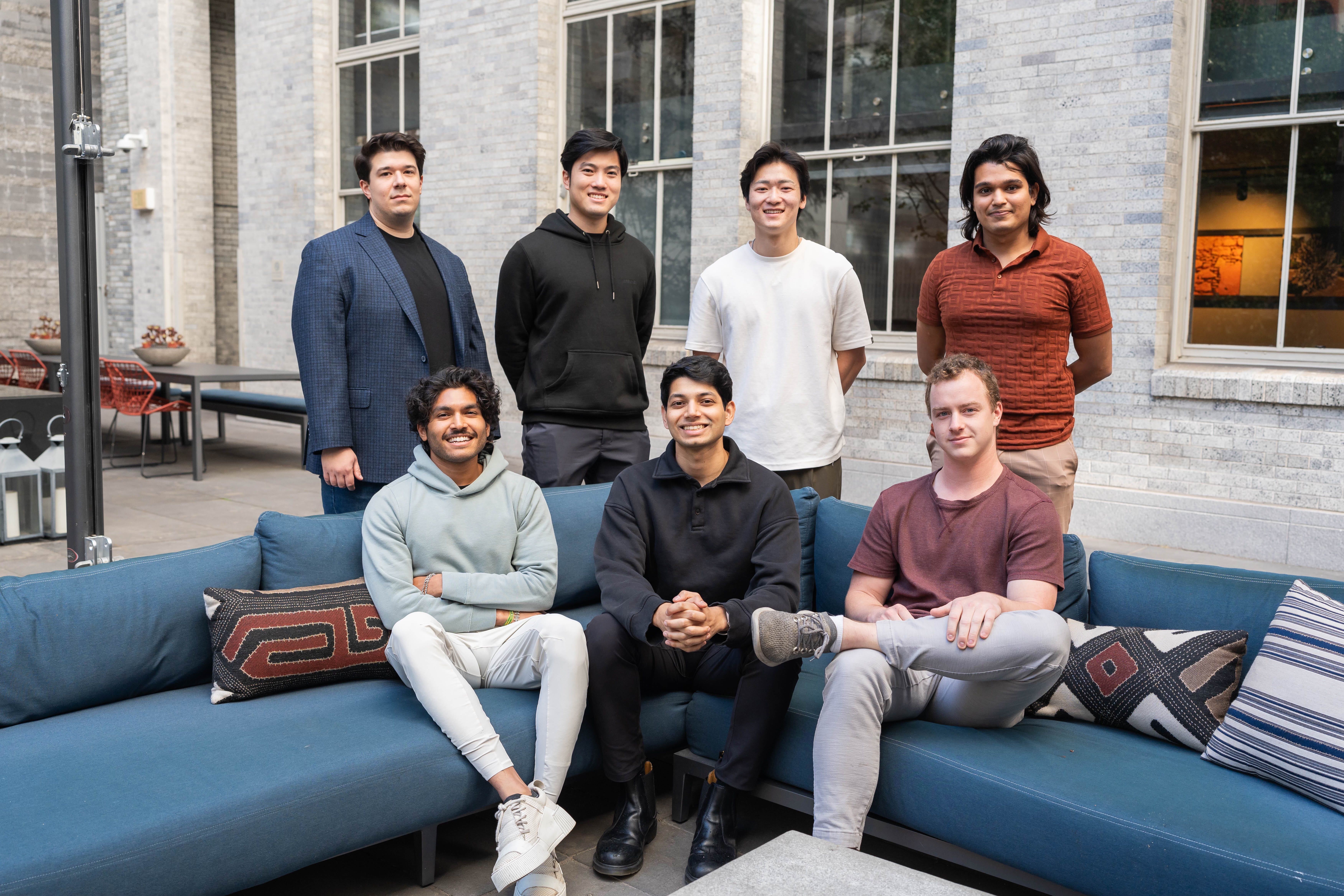
Today we're announcing that New Lantern has raised a $19 million Series A led by Benchmark.
The round reflects a conviction we've held since day one: the biggest productivity problem in radiology isn't image interpretation. It's everything around it.
The Origin Story
New Lantern started with a simple observation. In 2020, I spent hours watching a radiologist's full workday up close. What I saw was striking: roughly seven to eight hours per day spent on workflow tasks that had nothing to do with clinical decision-making. The actual time spent with a "radiology thinking cap on" was a fraction of the shift.
The culprit wasn't a lack of talent or effort. It was the software. Two core systems dominate a radiologist's day: PACS (the digital library where doctors view scans) and reporting software (where they translate images into diagnoses). These systems don't talk to each other well. Switching between them is clunky. And layered on top are separate worklists, separate AI tools, separate EHR integrations, each with its own login and its own interface.
That fragmentation is the problem we set out to fix.
What We Built
New Lantern combines the worklist, PACS viewer, and AI-powered reporting into a single cloud-native platform. One login. One workspace. Case pickup to signed report without switching tabs.
Our AI reporting assistant, Curie, handles the documentation tasks that traditionally slow radiologists down: automated measurements, prior comparisons, and draft impressions that learn each radiologist's language and style over time. The result is a workflow where radiologists can move through cases significantly faster, not because they're rushing, but because they're no longer fighting their tools.
Why Benchmark
Benchmark's Eric Vishria told TechCrunch that he'd evaluated several AI-powered radiology startups before investing in New Lantern. Most focused on image analysis, essentially trying to replicate what radiologists already do well. He passed on those.
What got his attention was our approach: instead of using AI to replace the radiologist, use it to eliminate the work radiologists never wanted to do in the first place. Let the doctor focus on reading scans. Let the software handle everything else.
The Bigger Picture
For years, the prevailing narrative in radiology AI has been that automation would make radiologists obsolete. That prediction hasn't aged well. Instead of a surplus of radiologists, the field faces a well-documented workforce shortage. Studies show radiologists spend as much as 44% of their day on non-interpretive tasks (Dhanoa et al., JACR 2013). Imaging volumes have grown dramatically while staffing has stayed flat.
The industry doesn't need AI that adds another tool to the stack. It needs AI that collapses the stack entirely.
That's what this funding allows us to accelerate. More radiologists, more modalities, more of the workflow handled by a single system that gets out of the way and lets clinicians practice medicine.
What's Next
We're using this round to expand our platform across the full spectrum of imaging modalities, deepen our AI capabilities, and grow our team. If you're a radiologist tired of managing four systems to do one job, or a practice leader looking to reduce vendor complexity and give your team better tools, we'd welcome the conversation.
Get in touch or see the platform.
Read the full TechCrunch coverage here.
Today we're announcing that New Lantern has raised a $19 million Series A led by Benchmark.
The round reflects a conviction we've held since day one: the biggest productivity problem in radiology isn't image interpretation. It's everything around it.
The Origin Story
New Lantern started with a simple observation. In 2020, I spent hours watching a radiologist's full workday up close. What I saw was striking: roughly seven to eight hours per day spent on workflow tasks that had nothing to do with clinical decision-making. The actual time spent with a "radiology thinking cap on" was a fraction of the shift.
The culprit wasn't a lack of talent or effort. It was the software. Two core systems dominate a radiologist's day: PACS (the digital library where doctors view scans) and reporting software (where they translate images into diagnoses). These systems don't talk to each other well. Switching between them is clunky. And layered on top are separate worklists, separate AI tools, separate EHR integrations, each with its own login and its own interface.
That fragmentation is the problem we set out to fix.
What We Built
New Lantern combines the worklist, PACS viewer, and AI-powered reporting into a single cloud-native platform. One login. One workspace. Case pickup to signed report without switching tabs.
Our AI reporting assistant, Curie, handles the documentation tasks that traditionally slow radiologists down: automated measurements, prior comparisons, and draft impressions that learn each radiologist's language and style over time. The result is a workflow where radiologists can move through cases significantly faster, not because they're rushing, but because they're no longer fighting their tools.
Why Benchmark
Benchmark's Eric Vishria told TechCrunch that he'd evaluated several AI-powered radiology startups before investing in New Lantern. Most focused on image analysis, essentially trying to replicate what radiologists already do well. He passed on those.
What got his attention was our approach: instead of using AI to replace the radiologist, use it to eliminate the work radiologists never wanted to do in the first place. Let the doctor focus on reading scans. Let the software handle everything else.
The Bigger Picture
For years, the prevailing narrative in radiology AI has been that automation would make radiologists obsolete. That prediction hasn't aged well. Instead of a surplus of radiologists, the field faces a well-documented workforce shortage. Studies show radiologists spend as much as 44% of their day on non-interpretive tasks (Dhanoa et al., JACR 2013). Imaging volumes have grown dramatically while staffing has stayed flat.
The industry doesn't need AI that adds another tool to the stack. It needs AI that collapses the stack entirely.
That's what this funding allows us to accelerate. More radiologists, more modalities, more of the workflow handled by a single system that gets out of the way and lets clinicians practice medicine.
What's Next
We're using this round to expand our platform across the full spectrum of imaging modalities, deepen our AI capabilities, and grow our team. If you're a radiologist tired of managing four systems to do one job, or a practice leader looking to reduce vendor complexity and give your team better tools, we'd welcome the conversation.
Get in touch or see the platform.
Read the full TechCrunch coverage here.
/
BLOG
Other insights

Interviews
/
Oct 7, 2026
No More Cherrypicking: Inside New Lantern's Agentic AI Worklist
Hear New Lantern's Ryan Chen explain how agentic AI tackles every radiologist's nightmare: cherrypicking. Interview from SIIM 2026.

Partnerships
/
Sep 28, 2026
CIRA Selects New Lantern's Cloud-Native Radiology Platform
Central Illinois Radiological Associates, an independent Midwest radiology practice with 93+ radiologists, selects New Lantern's cloud-native platform.

Seminar Collection
/
Sep 14, 2026
Intelligent and Agentic Worklist Routing - SIIM26 Seminar
A fairer worklist for radiologists: smart, sustainable, and simple routing that keeps STAT cases from stacking on the same few people. See Ryan Chen's Seminar on Intelligent Worklist Routing at SIIM26