Customer Success
How Naugatuck Valley Radiology Beat an End-of-Life Deadline
NVRA's long-standing reporting platform was ending. See how the practice moved to New Lantern on a tight deadline without disrupting its radiologists
/
AUTHOR
Pragati Dwivedi

Naugatuck Valley Radiology (NVRA) has served central Connecticut for more than 35 years, with outpatient imaging centers in Waterbury, Southbury, and Prospect. The physician-owned practice was the first in Connecticut recognized by the American College of Radiology as a Diagnostic Imaging Center of Excellence.
The Challenge: A Deadline With No Margin for Error
NVRA’s long-standing PowerScribe 360 platform was approaching end-of-life, and the cost of staying on it was about to rise. The practice needed a new platform in place quickly: live, stable, and integrated with the systems it already ran.
Before coming to New Lantern, NVRA had tried another vendor. It didn’t work out. That left the requirements strict: move fast, don’t touch the workflows radiologists already depended on, and get the integration right the first time.
Across NVRA’s sites, patient records don’t always arrive under one shared identifier. A patient’s prior imaging can exist under more than one medical record number depending on where and when it was done, including studies held in an outside hospital’s own archive. Match wrong once, and it isn’t an inconvenience. It’s a radiologist reading the wrong prior against the wrong patient. There was no room for that.
Delivering Speed Without Compromise
NVRA’s environment was complex: roughly 20 tightly integrated application systems, including 10 to 15 separate AI, follow-up, and clinical tools used daily, plus years of imaging data spread across a fragmented archive.
New Lantern built the routing and integration layer NVRA had been missing, instead of asking the practice to give up systems its radiologists already relied on. That meant linking two data streams that don’t reconcile on their own: HL7 order messages carrying patient and exam information, and the DICOM images generated at the modality. When a new order comes in, that link lets NVRA resolve a patient’s prior studies automatically, even when they carry different record numbers across separate archives, and attach them to the correct exam before a radiologist opens it.
The same link makes worklist routing possible across NVRA’s multiple sites. A study is only useful in a radiologist’s queue once it’s matched to the right patient, order, and priors, and assigned to the right reader. Automating that match removed a category of manual work from NVRA’s IT team’s day: cross-checking identifiers and chasing down mismatched studies by hand, every time two systems disagreed.
The New Lantern team reconciled NVRA’s data archive in place, piece by piece, and ran the full migration alongside NVRA’s own staff, ahead of the deadline.
The Outcome
For NVRA’s IT team, the result was one connected system instead of a growing pile of tools to maintain, with integration logic that resolves patient records automatically instead of by hand. For its leadership, a hard deadline met without compromise. For its radiologists, the same systems they already knew, now fully integrated, with no disruptive relearning curve.
NVRA’s leadership put it best:
The professionalism and expertise of your entire team was the foundation to the project’s success — communications, follow-up, listening and open avenues for product enhancements are unsurpassed in my experience.”
— Paul Masotto, Executive Director, Naugatuck Valley Radiology (shared with permission)
A Model for Practices Facing Similar Deadlines
NVRA got a new platform in place before its deadline, without giving up the systems its radiologists already trusted. That’s the whole story: a hard transition, done in place, on time.
Naugatuck Valley Radiology (NVRA) has served central Connecticut for more than 35 years, with outpatient imaging centers in Waterbury, Southbury, and Prospect. The physician-owned practice was the first in Connecticut recognized by the American College of Radiology as a Diagnostic Imaging Center of Excellence.
The Challenge: A Deadline With No Margin for Error
NVRA’s long-standing PowerScribe 360 platform was approaching end-of-life, and the cost of staying on it was about to rise. The practice needed a new platform in place quickly: live, stable, and integrated with the systems it already ran.
Before coming to New Lantern, NVRA had tried another vendor. It didn’t work out. That left the requirements strict: move fast, don’t touch the workflows radiologists already depended on, and get the integration right the first time.
Across NVRA’s sites, patient records don’t always arrive under one shared identifier. A patient’s prior imaging can exist under more than one medical record number depending on where and when it was done, including studies held in an outside hospital’s own archive. Match wrong once, and it isn’t an inconvenience. It’s a radiologist reading the wrong prior against the wrong patient. There was no room for that.
Delivering Speed Without Compromise
NVRA’s environment was complex: roughly 20 tightly integrated application systems, including 10 to 15 separate AI, follow-up, and clinical tools used daily, plus years of imaging data spread across a fragmented archive.
New Lantern built the routing and integration layer NVRA had been missing, instead of asking the practice to give up systems its radiologists already relied on. That meant linking two data streams that don’t reconcile on their own: HL7 order messages carrying patient and exam information, and the DICOM images generated at the modality. When a new order comes in, that link lets NVRA resolve a patient’s prior studies automatically, even when they carry different record numbers across separate archives, and attach them to the correct exam before a radiologist opens it.
The same link makes worklist routing possible across NVRA’s multiple sites. A study is only useful in a radiologist’s queue once it’s matched to the right patient, order, and priors, and assigned to the right reader. Automating that match removed a category of manual work from NVRA’s IT team’s day: cross-checking identifiers and chasing down mismatched studies by hand, every time two systems disagreed.
The New Lantern team reconciled NVRA’s data archive in place, piece by piece, and ran the full migration alongside NVRA’s own staff, ahead of the deadline.
The Outcome
For NVRA’s IT team, the result was one connected system instead of a growing pile of tools to maintain, with integration logic that resolves patient records automatically instead of by hand. For its leadership, a hard deadline met without compromise. For its radiologists, the same systems they already knew, now fully integrated, with no disruptive relearning curve.
NVRA’s leadership put it best:
The professionalism and expertise of your entire team was the foundation to the project’s success — communications, follow-up, listening and open avenues for product enhancements are unsurpassed in my experience.”
— Paul Masotto, Executive Director, Naugatuck Valley Radiology (shared with permission)
A Model for Practices Facing Similar Deadlines
NVRA got a new platform in place before its deadline, without giving up the systems its radiologists already trusted. That’s the whole story: a hard transition, done in place, on time.
/
BLOG
Other insights

Seminar Collection
/
Sep 14, 2026
Intelligent and Agentic Worklist Routing - SIIM26 Seminar
A fairer worklist for radiologists: smart, sustainable, and simple routing that keeps STAT cases from stacking on the same few people. See Ryan Chen's Seminar on Intelligent Worklist Routing at SIIM26

Customer Success
/
Sep 3, 2026
How Southern Radiology Ventures Doubled Exam Volume in Less than 1 Year
See how Southern Radiology Ventures scaled from 10 to 20 sites and doubled exam volume in under a year, without doubling back-office headcount, using New Lantern.
Product Enhancements
/
Mar 10, 2026
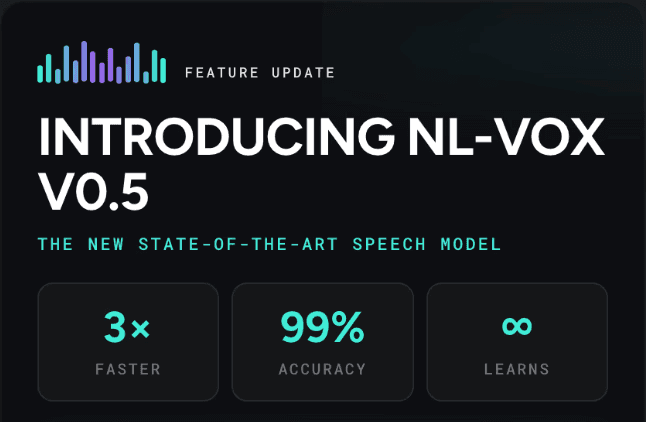
New Lantern Releases State-of-the-art Radiology Speech Model
New Lantern's speech model is purpose-built for radiology dictation, handling medical terms, laterality, and dates that general speech engines get wrong.